
The Oregon Critter & Travel Co.
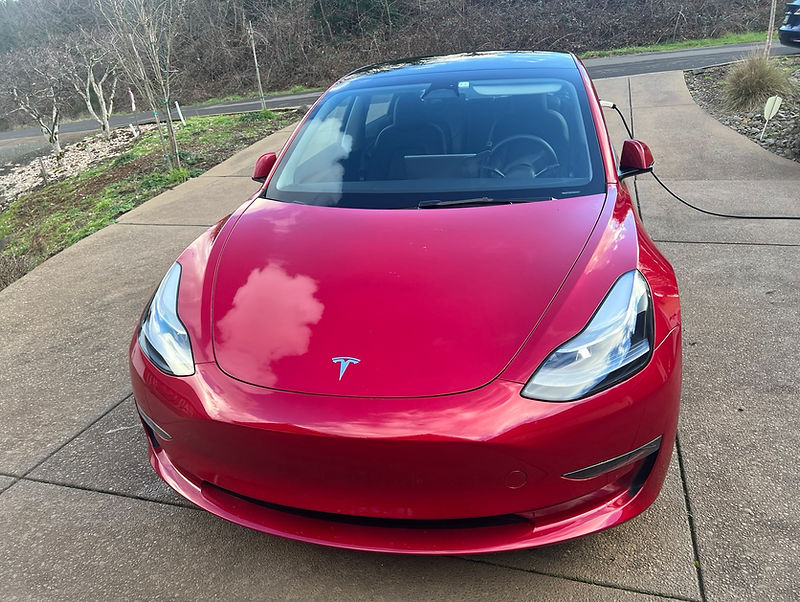
Superchargers were built for Teslas like this one, so the cable is short. Park smart (tips below).
Charging a Non-Tesla at a Tesla Supercharger
Yes, your Kia, Hyundai or Chevy can probably do it. Here's how.
TL;DR: Most major brands now have Supercharger access. You need (1) a NACS port or your automaker-approved NACS adapter, (2) the Tesla app (or your car's own app) with a payment method, and (3) a Supercharger that shows as open to your car in the app.
Which brands have access (October 2026)
Tesla lists these automakers: Acura, Audi, BMW, Ford, General Motors (Chevrolet, GMC, Cadillac), Genesis, Honda, Hyundai, Jaguar Land Rover, Kia, Lucid, Mercedes-Benz, Nissan, Polestar, Porsche, Rivian, Stellantis, Subaru, Toyota, Volkswagen and Volvo.
⚠️ A brand on the list doesn't mean every model qualifies. Your app is the final word.
Step by step
-
Check your charge port.
-
NACS port (many 2025+ EVs): plug straight in.
-
CCS1 port: you need a NACS-to-CCS1 DC adapter approved by your automaker. Several automakers warn that unapproved adapters can void your warranty.
-
Some sites have a built-in "Magic Dock" adapter on the cable, so no adapter is needed there.
-
-
Set up the app. Download the Tesla app → Charge Your Other EV → add your make, model and year, say whether you have an adapter, and add a payment method. Many automaker apps (myChevrolet, Kia Access, MINI/BMW) can also find, start and pay for Supercharger sessions.
-
Find a compatible site. Only V3 and newer Superchargers are open to other EVs, and the app shows which ones work for your car.
-
Park smart. Supercharger cables are short and built for a Tesla's rear-left port.
-
Back in or pull in so your port faces the post.
-
End stalls are easiest. Newer V4 posts have longer cables.
-
If you have to block a neighboring stall, keep it short and move as soon as you're done.
-
-
Plug in and start. Click the adapter onto the Tesla connector first, then plug into your car. Pick the stall number (printed on the post) in the app and tap Start.
-
Pay attention to price. Non-Teslas pay a higher rate unless they buy Tesla's Supercharging Membership (about $12.99/month in the U.S.). Idle fees apply if you linger.
What this means for our rentals
-
Hyundai Ioniq 5 (2024, CCS): ✅ Yes. Hyundai-authorized NACS adapter, plus the Tesla app. Expect up to ~135 kW at most Superchargers. It's faster at 350 kW CCS stations.
-
Kia EV6 (2023, CCS): ✅ Yes. Kia NACS adapter (sold through Kia dealers), plus Kia Access / Charge Pass or the Tesla app. Same ~130 kW limit.
-
Chevy Bolt EV (2022): ✅ Yes. GM NACS DC adapter (bought in the myChevrolet app), then pay with myChevrolet or the Tesla app. Tops out around 55 kW wherever it charges.
-
MINI Cooper SE (2023): ❌ Not with an adapter. MINI says the Cooper SE hardtop isn't compatible. Only sites with a built-in Magic Dock work. Use CCS networks (Electrify America, EVgo, bp pulse).
-
Tesla Model 3 (2023): ✅ Of course. Just plug in.
Renting from us? Check your Turo listing or message us to find out which adapters are in the car.
Handy gear
-
Lectron Vortex Plus NACS-to-CCS1 Adapter (UL 2252): Lets eligible CCS-port EVs plug into Tesla Superchargers. It's the adapter BMW and MINI officially approve. Owners of GM, Hyundai and Kia cars should check their automaker's approved adapter first (warranty).
Tip: if your automaker sells or gives away its own adapter (Hyundai has offered free ones to eligible owners), start there.
Want to try an EV before you buy? Rent an EV from ORCritters on Turo. We're veteran-owned and Salem-based, with Salem airport delivery available.
← Back to the guide: Charging Made Simple
Next up: Salem Fast-Charger Map
As an Amazon Associate we earn from qualifying purchases.